
The Golden Age of Asian Cricket: From Continental Rivalry to Global Dominance
एशियाई क्रिकेट पिछले दो दशकों में वैश्विक खेल का आर्थिक और प्रतिभा केंद्र बन गया है। भारत, पाकिस्तान, श्रीलंका, बांग्लादेश और अफ़ग़ानिस्तान की राष्ट्रीय टीमें तथा IPL, PSL, BPL और LPL जैसी फ़्रैंचाइज़ी लीगें इस बदलाव का आधार हैं। एशिया कप क्षेत्रीय प्रतिस्पर्धा का प्रमुख मंच है, जबकि विराट कोहली, बाबर आज़म, शाकिब अल हसन और राशिद खान जैसे खिलाड़ी वैश्विक ब्रांड बन चुके हैं। महिला क्रिकेट का विस्तार और अफ़ग़ानिस्तान का उदय एशियाई क्रिकेट के सबसे प्रेरणादायक पक्ष हैं।
The centre of gravity in world cricket has shifted decisively eastwards over the past two decades. Where once the game's control, talent pool and financial muscle were concentrated in countries such as England and Australia, today Asia has become not only the economic engine of cricket but also the force that shapes the global game's direction in terms of talent production, audience size and broadcast rights. The combined influence of India, Pakistan, Sri Lanka, Bangladesh and Afghanistan is now visible at every level, from International Cricket Council (ICC) policy to the calendars of franchise leagues. This transformation did not happen overnight; it is the result of decades of competition, struggle and strategic investment.
The foundations of Asian cricket were laid during the colonial era, when the game arrived with the British in regions such as India and Ceylon. After independence, these nations tied cricket to their identity and national pride. The rivalry between India and Pakistan turned the sport into something larger than religion in the subcontinent, while Sri Lanka earned its place on the global stage in the 1980s and 1990s through tactical awareness and a formidable spin attack. Bangladesh wrote a new chapter by gaining Test status in the late 1990s, and Afghanistan emerged from war and displacement to prove that talent knows no borders.
The Asia Cup is the clearest symbol of this continental development. Organised by the Asian Cricket Council (ACC), the tournament has been played since the 1980s and its format has evolved over time. In its journey from ODIs to T20s, it has produced many memorable contests and given smaller cricket nations a platform to prove themselves on a big stage. The significance of the Asia Cup is not limited to the trophy; it is a stage for regional unity, for keeping the game alive amid political tensions, and for the emergence of new talent. When India and Pakistan face each other, the eyes of viewers around the world turn to this continent, and that very contest multiplies the commercial value of the sport.
India is today the biggest economic power in world cricket. The Indian Premier League (IPL) has not only transformed the face of domestic cricket but also forged the model of franchise cricket globally. The success of the IPL proved that cricket is no longer merely a game of national teams; it has become a global marketplace of entertainment, investment and talent. The depth and bench strength of the Indian team are now considered the strongest in the world, and the credit goes to the domestic structure, the National Cricket Academy and a vast talent-scouting network. Players such as Virat Kohli and Rohit Sharma have become global brands whose popularity reaches ordinary audiences far beyond traditional cricket fans.
Pakistan's story is a unique blend of struggle and talent. International hosting was affected for a long time due to security concerns, but the Pakistan Super League (PSL) gave fresh energy to domestic cricket and opened the path for the return of international cricket. Players such as Babar Azam are now counted among the world's best batsmen, and Pakistan's fast-bowling tradition—which produced stars from Imran Khan to Wasim Akram and Waqar Younis—continues today in the form of new talents. Pakistan cricket's greatest strength is its fighting spirit, which on big stages often turns into unexpected performances.
Despite being a small country, Sri Lanka built a big identity in cricket. The 2026 World Cup victory showed that strategy, discipline and collective spirit can challenge the biggest powers. Players such as Kusal Mendis and Wanindu Hasaranga are now giving the team a new direction. Sri Lanka's spin attack and fielding intensity remain its identity. Bangladesh has shown in the past decade, through its domestic structure and experienced players such as Shakib Al Hasan, the ability to beat big teams on home soil. The Bangladesh Premier League (BPL) has given local talent a stage, although consistency remains a major challenge.
Afghanistan is the most inspiring story in Asian cricket. Its journey from refugee camps to the World Cup is a living example of change through sport. Players such as Rashid Khan, Mohammad Nabi and Rahmanullah Gurbaz have proved that despite limited resources, determination and the right guidance can achieve great things. Afghanistan's spin bowling is now counted among the most dangerous bowling units in the world, and its success in the T20 format has kindled hope for new cricket nations.
Franchise cricket has completely changed the ecosystem of Asian cricket. After the IPL, platforms such as the PSL, BPL, Lanka Premier League (LPL) and the Emerging Teams Asia Cup have given players both global experience and financial security. These leagues have not only raised the quality of the game but also promoted cultural exchange among players. It is now common for an Indian player to play alongside a Pakistani or Sri Lankan team-mate, and for an Afghan player to play in a Bangladeshi franchise. This exchange lifts cricket above political tensions and makes it a shared cultural heritage.
Asian countries have accelerated their efforts in talent development. India's National Cricket Academy and state-level structures, Pakistan's academies, Sri Lanka's school cricket system and Bangladesh's age-group cricket have now taken systematic shape. The performance of Asian teams in Under-19 World Cups is proof that preparation for the future is strong. At the same time, the use of data analytics, fitness management and sports science is now reaching smaller cricket nations, raising the level of competition continuously.
Women's cricket is Asia's fastest-growing force. The Indian women's team has established itself globally, while the women's teams of Pakistan, Sri Lanka and Bangladesh are also performing better and better. The launch of the Women's Premier League (WPL) has given women's cricket the financial and media support it had long needed. This change is not limited to sport; it is also a symbol of changing social attitudes, where girls are now choosing cricket as a career.
However, these successes come with challenges. An excessively busy cricket calendar, player workload, rising injury risk and the balance between franchise and country are major issues today. Economic inequality within Asian cricket is also a serious concern—where the IPL is a multi-billion-dollar business, the domestic structures of some countries still struggle with a lack of resources. The impact of political tensions on bilateral series, the centralisation of broadcast rights and the weakening voice of smaller nations are issues that both the ACC and the ICC must consider seriously.
Despite these challenges, the future of Asian cricket is bright. Several major events are set to take place in Asia in the coming years, and the emergence of new cricket nations is expected to make competition even more exciting. Technology, data and the experience of global leagues have prepared Asian players better than ever. Most importantly, Asia has proved that cricket is not merely a sport but also a means of social change, economic opportunity and cultural unity.
In conclusion, Asian cricket is today in its golden age. The journey from continental rivalry to global dominance is the result of struggle, talent and far-sighted investment. India's economic power, Pakistan's fighting spirit, Sri Lanka's tactical understanding, Bangladesh's growing confidence and Afghanistan's inspiring story together create a picture in which cricket continues to reach new heights. If Asian cricket succeeds in removing its internal inequalities and prioritising player welfare, then in the coming decade this continent will remain the centre not only of the sport but also of global sporting culture.
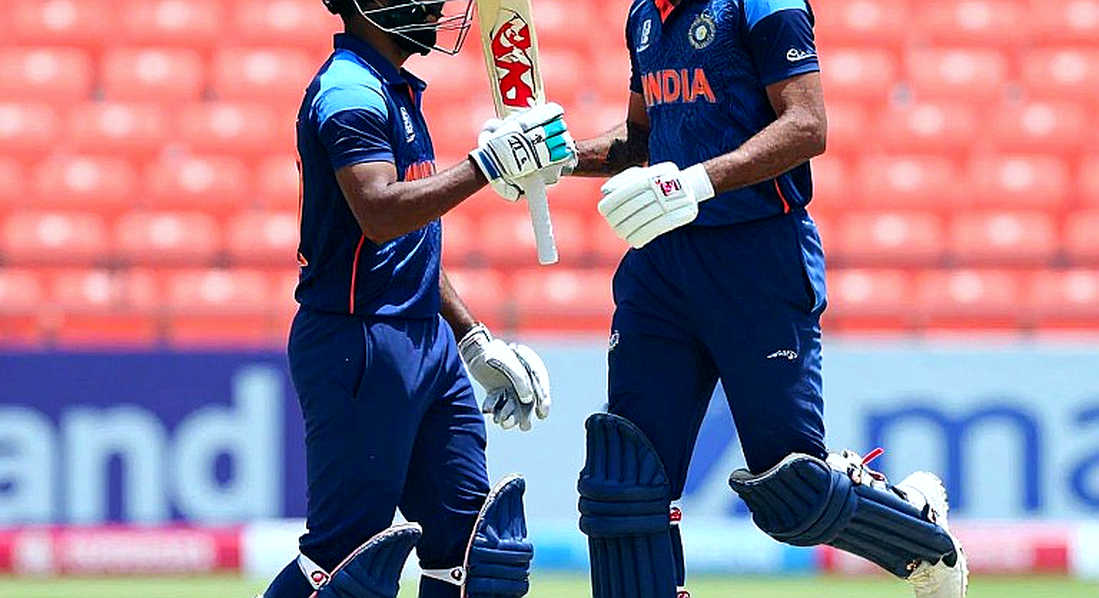

संबंधित खिलाड़ी