
Abhishek Sharma: One 38-Ball Innings and a Large Claim of ‘Fear’ — What the Numbers Say, and What They Don’t
सारांश: अभिषेक शर्मा ने न्यूज़ीलैंड दौरे के एक टी20 अंतरराष्ट्रीय मुकाबले में 38 गेंदों पर 113 रन बनाए (स्ट्राइक रेट लगभग 297)। इनमें नौ चौके और ग्यारह छक्के शामिल हैं; 102 रन यानी 90.3 प्रतिशत रन केवल बाउंड्री से आए, जबकि शेष 18 गेंदों पर सिर्फ 11 रन बने। यह उच्च बाउंड्री-निर्भरता वाला, उच्च-वेरिएंस प्रोफ़ाइल है। पारी विदेशी धरती पर आई, जो अभिषेक के पक्ष की मज़बूत बात है, लेकिन उपलब्ध सामग्री में मैच का परिणाम, टॉस, पिच रिपोर्ट, विरोधी गेंदबाज़ी की गुणवत्ता या आउट होने का पैटर्न नहीं दिया गया — इसलिए ‘फ्लैट-ट्रैक बुली’ की आलोचना सांख्यिकीय रूप से खारिज नहीं हुई, केवल टाल दी गई है। करियर के आँकड़े (71 टी20, 2,267 रन, औसत 33.33, स्ट्राइक रेट 196, चार शतक) आंतरिक रूप से संगत हैं पर सत्यापन लंबित हैं; यह भी स्पष्ट नहीं कि ‘71 टी20’ का अर्थ टी20 अंतरराष्ट्रीय है या कुल टी20, और 196 करियर आँकड़ा है या हाल की अवधि का। 26 वर्ष की उम्र में एक भी वनडे और टेस्ट कैप न होना सबसे महत्वपूर्ण तथ्य है: खेल-मूल्य सिद्ध नहीं हुआ, जबकि एंडोर्समेंट और ब्रांड मूल्य पहले ही आगे बढ़ चुके हैं। आईसीसी टी20 रैंकिंग में नंबर एक स्थान फॉर्म का संकेतक है, दीर्घकालिक प्रभुत्व का प्रमाण नहीं। निष्कर्ष: अभिषेक विश्व-स्तरीय टी20 पावरप्ले संपत्ति हैं, लेकिन बहुप्रारूपीय भविष्य अनसुलझा है; कोई सत्यनिष्ठा या शासन-विवाद नहीं; कुल जोखिम मध्यम, मुख्य जोखिम करियर-आकार और ‘अगला आइकन’ वाली अति-प्रचार जोखिम।
In a T20 international on India's tour of New Zealand at Wellington, Abhishek Sharma faced 38 balls and made 113 runs. The number is a statement in itself — a strike rate of roughly 297, or nearly a run a ball three times over. On the strength of that innings, a set of claims has been assembled: that Abhishek is now the 'name of fear' for bowlers, that he has demolished the 'flat-track bully' tag, that he has silenced his critics, and that he has formally arrived as Indian cricket's next icon. This report tests those claims. It proceeds from evidence rather than sentiment, and wherever evidence is absent, it says so plainly.
First, what is solid
113 off 38. The innings contained nine fours and eleven sixes. The arithmetic is simple: 36 runs in fours and 66 in sixes, so 102 runs came from boundaries alone — 90.3 per cent of the total. On the remaining 18 balls he scored 11 runs, a strike rate of about 61. Twenty of the 38 deliveries (52.6 per cent) produced a boundary; the other 18 produced none.
That single data set says two things at once. First, on the day his batting was world class — a 297 strike rate is extraordinary in any T20, and it came away from home rather than on a familiar Indian surface. Second, the innings was structurally boundary-dependent to an unusual degree. When nine-tenths of the runs come in fours and sixes and the non-boundary strike rate sits at 61, there is no second scoring mode in operation. As long as the ball was coming nicely onto the bat, runs flowed; as an alternative, the singles-and-twos accumulation model simply did not appear.
That is the most important technical fact about the innings, and it is the fact that celebratory coverage gives the least space to. High boundary dependency means a high-variance profile. Such a batter can make 113 one day and be out for 11 off 14 the next, because the entire scoring structure rests on the one thing that conditions, weather and bowling plans can switch off.
What the report does not tell you
Consider what was needed to judge the innings and what is missing: who won the toss, whether India batted first or chased, what the match result was, what the series score was, how good the opposition attack was, what the pitch report said, and whether dew or DLS played a part. None of it appears in the material. This is not a small omission. For a piece built on a single innings, not mentioning the result of the match or the nature of the surface is itself notable.
This is the central evidential gap. If there was grass and the ball seamed, 113 is strong counter-evidence to the 'flat-track bully' charge — because it does the exact job the criticism says he cannot do. If the surface was flat, the same innings confirms the criticism. The conclusion differs in each direction, and not one figure in the report settles which direction applies.
The heading itself concedes the point — 'whether there is grass on the wicket or not'. That is a defensive rhetorical device, not a demonstrated fact. It pre-empts the strongest criticism rather than answering it. A rigorous rebuttal requires a split of his scoring rate by surface type, a split of his dismissal pattern on seaming versus flat pitches, and separate home and away records. None is supplied.
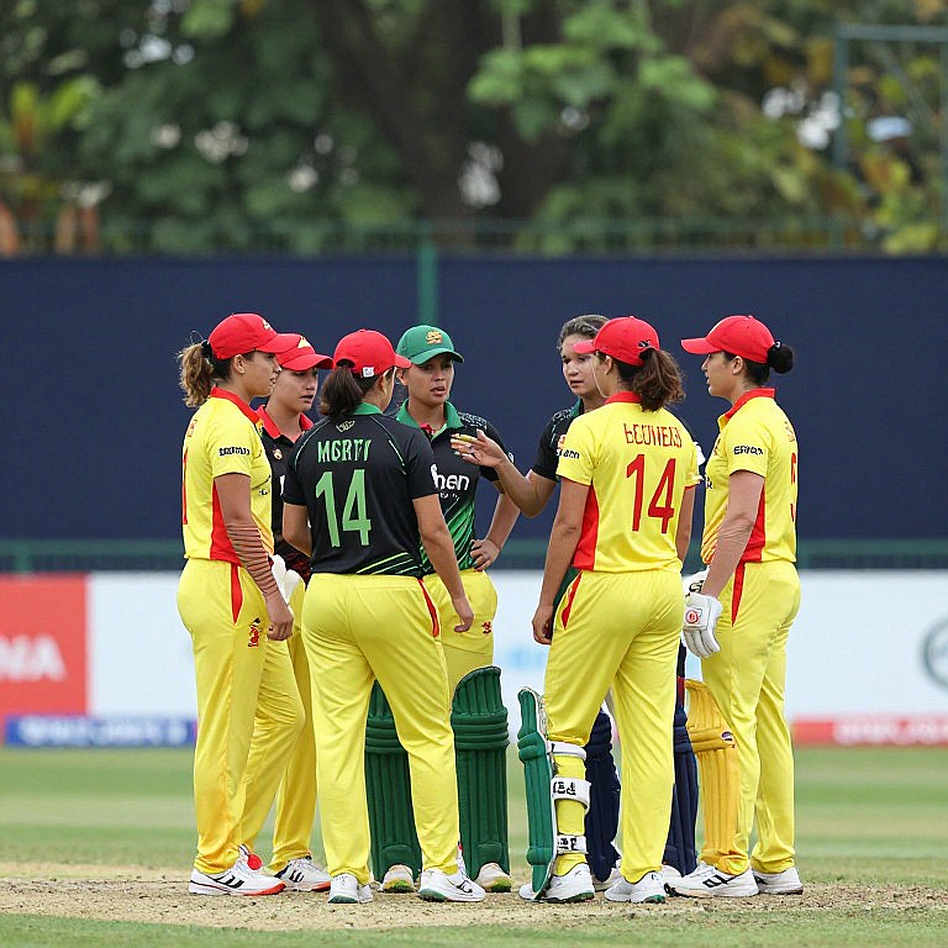
The venue also needs a boundary drawn around it. Wellington is away for India, wind is a structural variable there, and early seam movement is common. But it is not confirmed whether the match was at the Basin Reserve or Sky Stadium, and the two behave differently. That detail is pending verification, and until it is settled, any venue-based conclusion must be treated as conditional.
The career line: verify before you celebrate
The figures offered are: 71 T20s, 2,267 runs, an average of 33.33, a strike rate of 196 and four centuries. They are internally consistent — 2,267 runs at 33.33 implies about 68 dismissals, and a 196 strike rate implies about 1,157 balls faced. The mathematics holds. Consistency and accuracy, however, are different things.
First flag: 71 T20 caps by the age of 26 with no ODI and no Test is an unusually high count, particularly in an Indian set-up where rotation and selection debate are both intense. Second flag: it is not stated whether 196 is a career T20I strike rate or a recent-window figure. Third flag: '71 T20s' may mean 71 T20 internationals or 71 T20 matches of all kinds, including the IPL and domestic competitions — a very common reporting conflation.
The consequence is the same in each case. A career strike rate of 196 is well beyond the benchmark of the world's best T20 batters, and building an argument on such a figure without independent verification is risky. This report records the numbers as pending verification, and every downstream conclusion should be read subject to that caveat. If the strike rate turns out to be a recent-window figure rather than a career figure, the whole 'sustained dominance' reading collapses.
Technique: testimony versus data
The most interesting technical claim in the report is that Abhishek does not slog but takes 'calculated risks'. It is attributed to former Pakistan captain Salman Butt and echoed by the author as 'precision behind the aggression'. The claim is strong. The question is: what is the proof?
The data required to establish it is entirely absent — a distribution of dismissal modes (how often he is bowled or lbw playing across the line, how often caught in the deep) and a scoring split by delivery type (short ball, full ball, spin, left-arm pace). None of it is given. The technical claim therefore rests on testimony, not statistics.
A source-grading note is appropriate here, and it is a note about sourcing rather than a finding. Salman Butt is a former Pakistan captain whose technical opinions are entirely legitimate commentary. But when a piece leans on a very small number of expert voices, the institutional weight of those voices is a relevant factor — his career ended in the 2026 spot-fixing case. That is not a comment on the accuracy of his specific technical point.
The most measured voice in the entire body of material therefore belongs to the opposition. Daryl Mitchell's assessment — that some of the shots were 'world class' and that he 'played well' — is specific, bounded and in the moment, and for that reason credible. Compare it with 'new-generation superstar' and 'broke down the door', which are unbounded. In sports journalism the smallest claim is usually the most accurate.
The flat-track charge: postponed, not retired
The criticism was simple: Abhishek scores heavily on flat, batting-friendly pitches and struggles when the ball seams or swings. Structurally, that is not an unfair criticism — it is exactly the right diagnostic question to ask of a profile with 90 per cent boundary dependency. Only its application can be wrong, and the application is not yet proven.
The report quotes Mohammad Kaif saying people should stop saying it. That is an emotional appeal, not a data rebuttal. Retiring the criticism would require showing scoring rate and dismissal patterns split by pitch type, and demonstrating that his output does not fall away on difficult surfaces. One innings, on an unspecified surface, in a match whose result and conditions are undisclosed, does not amount to a statistical refutation. It is, however, a strong first piece of evidence, and that should be acknowledged.
The irony is that the strongest argument on Abhishek's side is present and underused. This innings came away from home. Scoring big on flat Indian pitches is one thing; scoring at this rate in Wellington wind against the seaming ball is another. The away century is the most solid fact in his favour, and instead of putting it front and centre, the report retreats into the 'grass or no grass' defence. That is a strategic error, because defences are mounted when the argument is weak — and here the argument existed.
The ranking: a form indicator, not a career measure
Abhishek has regained the No. 1 position in the ICC T20I batting rankings. That is a real achievement, but its nature needs to be understood. The ICC ranking is a weighted system that places heavy emphasis on recent performances and adjusts for opposition strength and match volume. The direct implication is that one outstanding series can lift a player to the top without a multi-year track record. The ranking is evidence of recent form, not of long-term dominance.
Add a practical point: a ranking is a perishable asset. It can turn over inside a single series. A report that hangs half its headline on a ranking is therefore exposed to the same turnover. The ranking is a legitimate reason to write the story; it is a risky basis for an evaluation.
India's top order: a shortage of places, not of talent
The real contest here is not against bowlers but inside the team. India's T20 top order is among the deepest in the world. Sanju Samson and Vaibhav Suryavanshi are both named as competitors for the same slots. When the world's No. 1 ranked batter is described as fighting for his place, the binding constraint is selection policy, not talent supply. That structurally suppresses the value of any individual hot streak.
The most revealing sentence in the material is attributed to the journalist Sharda Ugra: everyone thought Vaibhav was going to be the next superstar, but Abhishek came and snatched that place. That is less a cricket sentence than a media-market sentence. It describes a single superstar slot in the Indian cricket ecosystem, occupied on the basis of recency rather than career accumulation. A 26-year-old displacing a teenage prodigy from that slot may be encouraging, but it is not proof of a permanent position.
That Rohit Sharma and Virat Kohli are in the twilight of their careers is true, and it opens a generational handover window. It does not follow that Abhishek is the designated successor. 'He broke down the door' is a metaphor, not a selection fact. The succession has not been announced, and one innings plus one ranking cannot announce it.
Which brings up the most important fact in the whole piece, mentioned only in passing: at 26, Abhishek has no ODI cap and no Test cap. Every data point here sits in the format with the shortest feedback loop and the widest variance.
The ODI debate is now open. Mohammad Kaif's public demand for an ODI opportunity indicates a live argument, not a settled one. A player with four T20 centuries and a 196 strike rate but no ODI cap is the product of selection policy, not of a talent gap.
The IPL: powerplay identity
The report describes the IPL arc — Delhi Capitals to Sunrisers Hyderabad, where he 'seemed to find his true identity', and where his partnership with Travis Head is said to 'decide the fate of the match in the first six overs'.
That is the most transferable insight in the whole body of material. The Head–Abhishek opening pair generates powerplay run-rate inflation. That is a real, quantifiable and highly prized T20 skill. But it is a role value, not a format-transcending value. The ability to manufacture boundaries in the powerplay is gold in T20; the same ability does not automatically translate into the 50-over equation or the red-ball discipline of Test cricket.
There is also a structural point the report does not raise: IPL conditions — flat surfaces, short boundaries, franchise-optimised roles — are systematically more batting-friendly than away T20I conditions. That is precisely how a 'flat-track' reputation is made, and challenging that reputation requires more than one innings in seam-friendly conditions abroad.
As for the assertion that 'his real identity remains his bat, not off-field glamour' — the sentence is itself a signal. It only needs saying when the opposite is the visible trend.
No auction price, retention status or contract value appears in the material. Any claim about an auction premium is therefore explicitly declined here: it would be speculation, not analysis. This is a clear null finding.
Commercial value is running ahead of sporting value
The report states plainly that he is 'signing deals with one organization after another' and is 'one of the most marketable faces among India's new-generation cricketers'. That is consistent with the described endorsement flow and is therefore accepted.
But sequencing matters. Brand valuation is running ahead of sporting valuation: the endorsement surge is arriving before multi-format establishment. That is normal in the Indian market, and it is also the exact mechanism by which expectations get mispriced.
Two halves of the report should therefore be read separately. 'Fear for bowlers' is a sporting claim; 'attractive to advertisers' is a commercial one. The report blends them into one continuous narrative, although their evidence bases and their quality are different.
Governance and rules: no controversy, and that should be stated plainly
Per risk-first protocol, this is recorded explicitly: there is no integrity signal in this material. No betting anomaly, no investigation, no allegation. No DRS, DLS, over-rate or fielding-restriction dispute. No political or geopolitical factor. This is a performance-profile piece and should be left as one.
The one genuinely relevant governance issue is selection policy: the BCCI's format-prioritisation framework and its central-contract grading system. That system rewards multi-format performance; a T20I-only specialist sits structurally lower in the contract hierarchy regardless of ranking position. This is a board-level decision, not a player-level one.
One factor absent from the report but relevant: cricket's inclusion at the 2028 Los Angeles Olympics in T20 format materially raises the strategic value of T20I specialists in board planning. That is a structural tailwind for Abhishek, and not mentioning it is a missed opportunity.
Risk: the real exposure is career shape, not performance
The first and largest risk is single-format lock-in. No ODI or Test cap at 26, and the longer that persists the harder the transition becomes. This is high-level risk because the remedy does not sit with the player; it sits in the selection calendar.
The second is the high-variance scoring profile. Ninety per cent boundary dependency means output is condition-sensitive. The remedy is technical: develop a rotation and accumulation mode, and track it through non-boundary strike rate.
The third is untested ground: there is no data on his record against the short ball, quality left-arm pace, or top-tier leg-spin. That is a significant blind spot, and a condition-specific audit is required before any multi-format elevation.
The fourth is selection displacement — Samson and Suryavanshi occupy the same slots, and India's top order is a surplus market. Rankings do not determine selection; squad sheets do.
The fifth is hype-backlash, and the report's own rhetoric raises it. 'Arrival music of a new star', 'India's new cricket idol', and the Gavaskar–Tendulkar–Kohli–Rohit lineage construction place him inside the most heavily loaded comparison framework in Indian cricket. The historical fulfilment rate of that framework is very low, and the report invokes it without hedging.
The sixth is a genuine blind spot: there is no data on injury history, workload or schedule density. In a piece this eager to discuss commercial upside, total silence on physical workload is a real gap. The honest entry here is 'insufficient information, cannot assess'.
Overall risk rating: medium. There is no integrity, governance or financial signal; the risk is concentrated in career-path risk and narrative risk. Neither is catastrophic; both are structural.
Industry: how far the effect travels
The broadcast effect is marginally positive: a marketable Indian star lifts the value of India's away T20I fixtures and bilateral rights in the subcontinent a little. The effect is small-to-medium and short-term.
The subcontinental sentiment market effect is medium: in the world's dominant cricket market, a new Indian batting star is the single most reliable demand driver. That is short-term at the sentiment level and medium-term structurally.
The most durable effect is on the talent pipeline, not on broadcast. Yuvraj Singh's mentorship, a former left-handed all-rounder shaping a left-handed power hitter through the COVID shutdown, and the 2026 Under-19 World Cup winning squad under Rahul Dravid feeding into the IPL — that is a replicable, teachable development model with a far longer half-life than one innings.
For fantasy sport this player is unusually valuable: a high-strike-rate, high-boundary opener raises engagement depth in a way that traditional batting-average analysis simply does not capture.
But claims about global transmission should be kept modest. The report's assertion that he has 'created a batting style that is very difficult to compete with worldwide' overstates the global effect. An Indian star lifts subcontinental engagement disproportionately; the effect on English or Australian domestic consumption is negligible.
Conclusion: a fine innings, a large claim, and the gap in between
In summary: this is a well-sourced but evidentially thin coronation piece. It uses one extraordinary away innings (113 off 38, with 90 per cent of runs from boundaries) and one form-weighted No. 1 ranking to argue that a 26-year-old T20I specialist has become Indian cricket's next icon. The innings is genuinely exceptional and the away context is a real point in his favour — but the central claim, that the 'flat-track bully' criticism is retired, is asserted rather than demonstrated. There is no split data, no pitch report, no match result, no dismissal pattern, and the career figures require independent verification.
The real story is not 'he answered his critics'. The real story is that India has produced a world-class T20 powerplay asset whose multi-format future is entirely unresolved — and whose commercial value is being priced ahead of that resolution.
What to watch next is therefore clear. The next three to five T20I innings, especially on seam-friendly surfaces: two or more innings below a 120 strike rate would materially weaken the 'conditions-proof' claim. ODI debut and selection communications: squad announcements, board statements, selector comments. Non-boundary strike rate: sustained below roughly 90 across a series would confirm boundary dependency as structural rather than one-off. Ranking trajectory: a slip from No. 1 weakens the headline claim. Competitor status: either Samson or Suryavanshi locking into the same slot would crystallise displacement risk. And endorsement volume against on-field output: continued brand growth through a form dip would signal commercial overheating.
One thing should be recorded clearly at the end. 113 off 38 balls with eleven sixes, away from home, is genuinely significant and should not be diminished. But one innings and an unverified career line cannot together support a claim like 'Indian cricket's next icon'. Praise should be given in its true quantity, and the question should be asked in its true place. In cricket the rarest thing is not talent but consistency — and consistency is proven only by time and by innings, not by headlines.
(The career figures cited here — 71 T20s, 2,267 runs, an average of 33.33, a strike rate of 196, four centuries — are pending verification and should be treated as final only after cross-checking against official ICC and ESPNcricinfo records. No data is available on the match result, toss, pitch report, opposition bowling quality, auction price, broadcast-rights values or injury history, and no conclusions have been drawn on those points.)