
The New Geography of Asian Cricket: Format, Market and Power in a Shifting Triangle
एशियाई क्रिकेट आज खेल की वैश्विक अर्थव्यवस्था का केंद्र है, लेकिन इसे एक इकाई की तरह नहीं देखा जा सकता। टेस्ट, एकदिवसीय और टी20 — तीनों के मापदंड, रणनीति और आर्थिक मूल्य अलग हैं; इन्हें मिलाकर कोई निष्कर्ष निकालना पद्धतिगत भूल है। संस्थागत स्तर पर एशियाई क्रिकेट परिषद (स्थापना 1983) और एशिया कप (पहला संस्करण 1984, शारजाह) इस क्षेत्र का सबसे स्थिर बहुपक्षीय ढाँचा हैं — भारत ने आठ बार, श्रीलंका ने छह बार और पाकिस्तान ने दो बार खिताब जीता है। भारत-पाकिस्तान द्विपक्षीय सीरीज़ 2012-13 के बाद से नहीं खेली गई हैं, इसलिए दोनों टीमों का आमना-सामना केवल बहुपक्षीय टूर्नामेंटों में होता है और उपलब्ध नमूना सांख्यिकीय रूप से छोटा है। आर्थिक शक्ति का मुख्य स्रोत फ्रेंचाइज़ी लीगें हैं — आईपीएल (2008), बीपीएल (2012), पीएसएल (2016), एलपीएल (2020), आईएलटी20 (2023) और नेपाल प्रीमियर लीग (2024)। इनमें स्पष्ट असमानता है, और नीलामी की कीमत को अंतरराष्ट्रीय खेल-क्षमता का प्रमाण मानना गलत है। अफ़ग़ानिस्तान (टेस्ट दर्जा 2017) और नेपाल (एकदिवसीय दर्जा 2018) ने प्रवेश की सीमा को चुनौती दी है। सबसे बड़े जोखिम हैं — प्रारूप-असंतुलन, प्रशासनिक अस्थिरता, राजस्व असमानता, कैलेंडर का भार और राजनीतिक अनिश्चितता। सुधार के लिए राजस्व वितरण में पारदर्शिता, सभी सदस्यों के लिए सुनिश्चित न्यूनतम कैलेंडर, टेस्ट क्रिकेट के लिए अलग वित्तीय समर्थन और प्रारूप-आधारित आँकड़ों का अनिवार्य उपयोग आवश्यक है।
The New Geography of Asian Cricket: Format, Market and Power in a Shifting Triangle
1. Introduction: One Continent, Three Different Games
Cricket is habitually treated as a single sport, but the assumption collapses the moment we enter the Asian sphere. Test cricket, One-Day International cricket and T20 cricket behave like three distinct games: their metrics differ, their tactics differ, and their economic value differs. In Tests, a batter's success is measured primarily by average; in T20, by strike rate; ODIs sit between them, where the innings must be split across two new balls and the final ten overs must be planned in advance. The gravest analytical error is to weigh all three on the same scale.
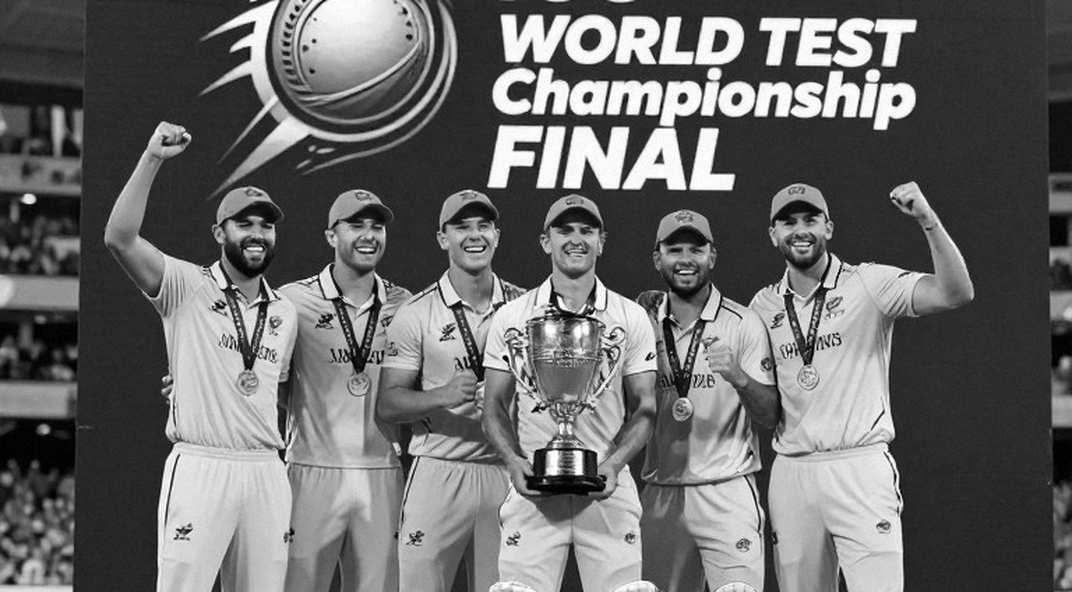
Asian cricket's defining feature is that it claims global leadership in all three formats simultaneously. India's Test dominance has been the most stable fact of the past decade; the same grip shows in ODIs; and in T20, Asia holds not only the strongest national sides but the wealthiest franchise league in the world. Without understanding this triangle, no development in Asian cricket can be assessed properly.
This analysis is not a review of one match, one series or one player. Its purpose is to understand the framework within which every major Asian cricket event occurs: the structure of format, institutional governance, franchise economics, and the architecture of audience expectation.
2. The Format Divide: One Name, Different Rules
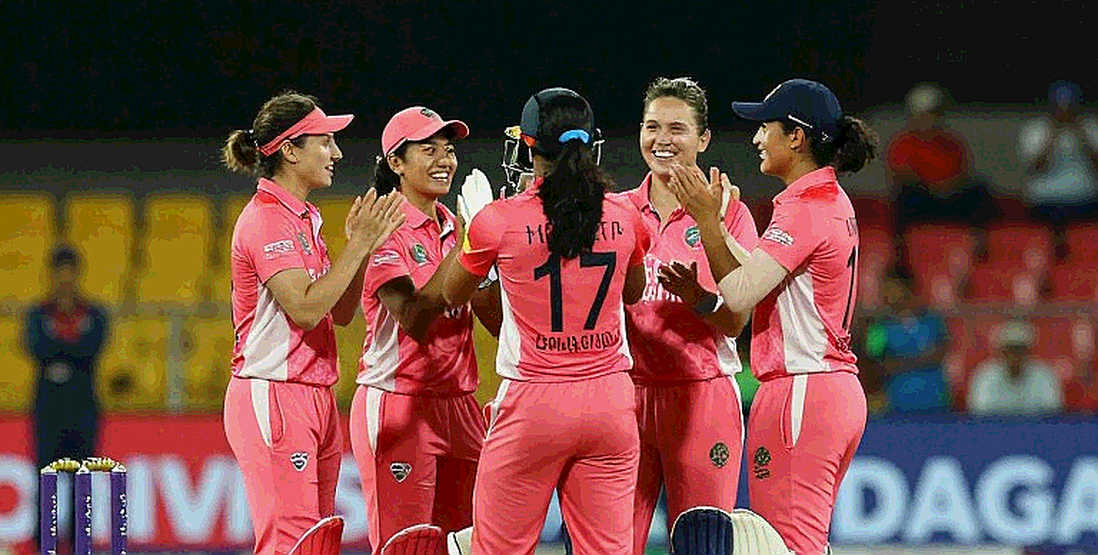
T20 strategy divides into three phases. The first six overs — the powerplay — carry fielding restrictions, and aggression has a different price. In the middle overs, spinners establish control and run-rate management becomes the priority. In the final four or five overs — the death overs — every ball's value spikes and a single error can turn the match. An analyst who evaluates a player by merging T20 numbers with Test numbers is combining findings from two different sports.
ODI structure is different. The two-new-ball rule splits the innings into two halves, giving seamers swing and seam movement from both ends. The art of holding an innings together in the middle overs and the art of exploding in the final ten overs make entirely different demands. A batter who anchors at a 75 strike rate in the middle can win the match at 160 in the closing overs — one innings, two roles.
Test cricket is different again. Its basic unit is the session, not the over. A fast bowler's capacity over five days is measured not by pace but by whether he can sustain rhythm on the fourth afternoon. The World Test Championship has attached a points table to this format, changing the value of every series. But WTC arithmetic applies only to Tests; merging it with ODI or T20 data is logically invalid.
A fourth format variant also exists in Asian cricket: England's Hundred, with its own 100-ball structure, in which several Asian players appear. Without identifying the format, any performance assessment remains incomplete, because the very definition of success changes.
3. The ACC and the Asia Cup Ecosystem
The Asian Cricket Council was founded in 2026, and its flagship product is the Asia Cup, whose first edition was played in Sharjah in 2026. Over four decades the tournament has become the region's most stable multilateral platform — stable precisely because it has persisted in a region where bilateral series frequently stall for political reasons.
Historically, India has won the title a record eight times (2026, 2026, 2026-91, 2026, 2026, 2026, 2026 and 2026). Sri Lanka has won six times (2026, 2026, 2026, 2026, 2026, 2026) and Pakistan twice (2026 and 2026). The distribution tells its own story: the tournament has never been one-sided, though India and Sri Lanka have dominated the past decade and a half.
The format has been cyclical. When a global ODI World Cup approaches, the Asia Cup is played in ODI format; when a T20 World Cup approaches, it switches to T20. This is not coincidence but deliberate preparation — the Asia Cup is designed as a rehearsal stage for the global event.
Yet the Asia Cup's greatest contribution is institutional rather than sporting. It is the platform where India and Pakistan have met regularly even during periods when bilateral series were entirely suspended. Staging the 2026 edition under a hybrid model — some matches in Pakistan, the rest in Sri Lanka — is simultaneously the ACC's greatest achievement and its greatest limitation: the tournament was not derailed, but the solution was a temporary arrangement, not a durable structure.
4. India–Pakistan: A Contest Beyond Sport
The fixture surfaces automatically in any Asian cricket discussion, and the reason lies outside the game. Bilateral series between the two countries have not been played since December 2026–January 2026. For over a decade, the two sides have met only in multilateral tournaments — the Asia Cup, the World Cup, the Champions Trophy, the T20 World Cup.
This creates a serious technical problem for analysis. When two teams play only a handful of matches in a decade, and those under the extreme pressure of multilateral events, any long-term pattern extracted from the head-to-head record is statistically fragile. Yet media and audiences assign enormous tactical weight to that small sample. This is Asian cricket's central narrative distortion.
The second layer is political. Managing India–Pakistan cricketing relations is no longer purely a matter for sporting bodies; it requires governmental consent on both sides. The direct consequence is that any future schedule can be disrupted by political developments. The practice of neutral venues is a by-product of this uncertainty.
The financial power of the Indian board further complicates the equation. Controlling the sport's largest revenue source gives it a decisive role in determining which event is held where and in which format. That fact keeps raising questions about the sport's fairness — and it underpins the sections that follow.
5. Sri Lanka and Bangladesh: The Middle Powers
Sri Lanka is Asian cricket's most underrated success story: six Asia Cup titles, a World Cup (2026) and a T20 World Cup (2026). A small island developed an entire tradition of bowling and fielding that the rest of the world has copied. Yet in recent years its biggest problem has been administrative rather than technical — repeated board changes, unstable selection committees, player indiscipline. When the institution is unstable, talent alone cannot hold.
Bangladesh's story is different. It built its identity in home conditions — patient batting on slow, spin-friendly pitches and wicket-to-wicket spin bowling. That style works at home but is equally weak on fast, bouncy foreign pitches. This is its permanent evaluation trap: home statistics conceal overseas weakness.
Both face a shared pressure — the pull of franchise cricket has weakened the national team's primacy. When a young player can earn substantially in a two-month league or play a five-day Test, his choice is naturally economic. The pool of players fully committed to Test cricket therefore shrinks — and the concern is sharper in Sri Lanka and Bangladesh, whose boards cannot offer the same security as the larger ones.
6. Afghanistan's Rise: Asia's Biggest Change
Afghanistan's arrival is the most remarkable Asian cricket development of the past decade. In 2026 the ICC granted it Test status — to a country that two decades earlier had no formal cricket structure. It is among the fastest ascents in any sport.
Its technical model is unusual. Its identity is spin bowling rather than batting — attacking spin that bowls to take wickets, not to contain. That model is ideal for T20 and paradoxical for Tests, where a spinner needs long spells and patience.
Three obstacles remain. First, the constraint on hosting — being unable to stage international matches at home over long periods is a loss no amount of training can offset. Second, inexperience in the Test format. Third, and most serious, financial stability: a large share of the board's income depends on the franchise leagues that contract its players — a dangerous dependency, since a shift in league policy could shake the foundation.
Even so, Afghanistan has proven that the entry threshold in Asian cricket is no longer purely economic. It breaks the perception of a closed club.
7. Nepal and the New Associate Wave
Nepal gained ODI status in 2026 and has since become the most attractive name among associate nations. Its main asset is crowd energy — matches in Kathmandu have drawn attendances several full members would envy. It is a resource whose economic value has not yet been properly extracted.
The Nepal Premier League launched in 2026, a natural next step. But such nations face a structural problem: the absence of a domestic calendar. A large board has a full-year schedule; an associate often has a handful of series. Players therefore accumulate little match experience, and talent identification rests on a fragile system.
Oman, the UAE, Hong Kong and Malaysia form part of this group, advancing mainly through the T20 route. Their contribution is to the sport's global spread, but they face a stark reality — without a financial base, performance lacks continuity.
8. The Economics of Franchise Leagues
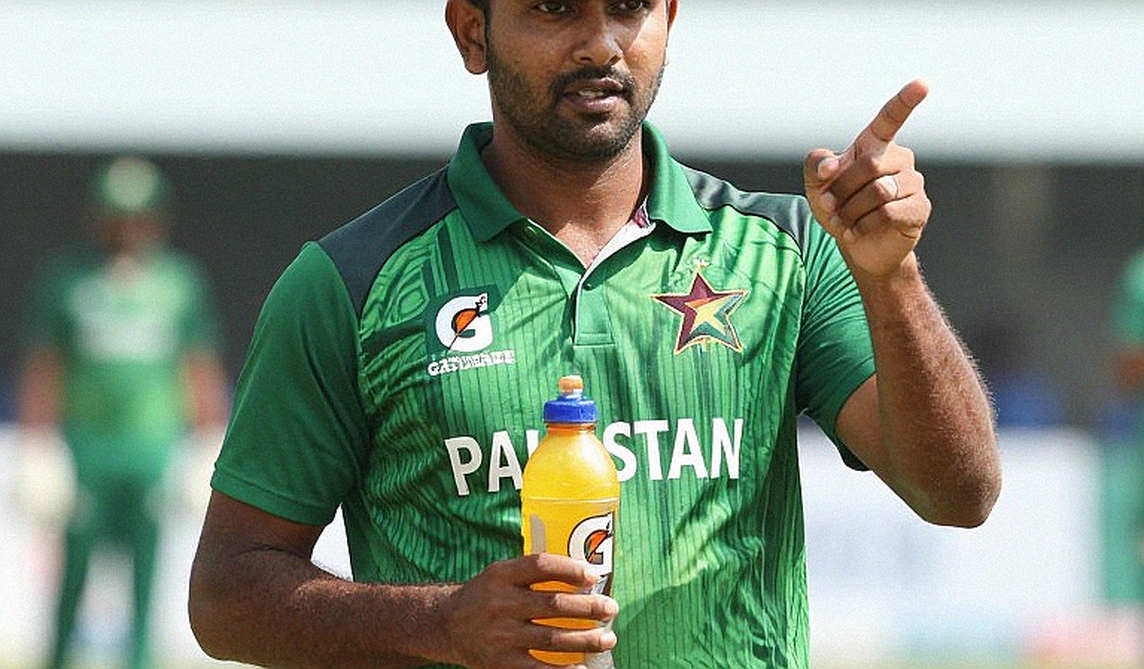
Asian cricket's economic engine is not national teams but franchise leagues. The Indian Premier League began in 2026 and is now the world's most valuable cricket property. The Bangladesh Premier League followed in 2026, the Pakistan Super League in 2026, the Lanka Premier League in 2026 and ILT20 in the UAE in 2026.
There is a clear asymmetry. IPL broadcast value, franchise valuation and player salaries sit at a level the others have not reached. The gap is not merely financial but ecological: the IPL has a market where advertisers, broadcasters and audiences exist simultaneously. Smaller leagues rarely get all three at once.
A less-discussed consequence is player migration. A strong IPL season now effectively guarantees national selection, even where first-class domestic records are modest. This inverts selection logic — league performance becomes the basis for national selection, when ideally national performance should drive league value.
9. Auction Price vs International Performance: Two Currencies
The most common error in cricket analysis is treating an auction price as proof of cricketing ability. They are separate things. Auction value results from a specific market situation — a team's particular need, the limited supply of available players that year, and the psychological competition of auction day. International performance is a multi-year, multi-condition measure.
Three premiums must be distinguished. First, the local young-star premium, where a franchise wants a popular regional player. Second, the scarce-skill premium — a left-arm quick or a wicketkeeper-batter, whose supply is thin. Third, the all-rounder premium, since one player covering two roles simplifies team balance. None of these directly measures international ability.
This is why inferring a national team's strength from auction data is dangerous. A team can be the most expensive at auction and mid-table internationally; conversely, a cheap signing can anchor a Test side for years.
10. Broadcast Rights and the Politics of Revenue Distribution
The largest share of global cricket revenue comes from broadcast rights, and the largest market is India. That fact is the central tension in ICC governance. The boards of India, England and Australia — informally the Big Three — hold a disproportionately large share of global revenue.
This produces instability in two ways. First, smaller boards lack financial autonomy, cannot invest in domestic structures, and fall into a cycle: less investment, weaker performance, lower income. Second, the larger board gains veto-like influence over scheduling, making it harder for smaller nations to secure major series.
This is not merely an ethical debate; it connects directly to competitive balance. If a country has no opportunity to play the bigger sides, how is its improvement measured — and how will it improve without that opportunity?
11. Governance, Rules and Controversy
Three mechanisms recur as flashpoints. First, the Duckworth-Lewis-Stern method, which recalculates targets after rain. It is statistically sophisticated, yet dissatisfaction persists because the value of remaining wickets changes with innings progress in ways that defy intuition.
Second, the Decision Review System and its umpire's-call rule. When ball-tracking falls within a defined error margin, the on-field decision stands. The rule was designed to avoid over-correcting tiny errors, but it created a new problem: one delivery can admit two interpretations, and the distinction is hard for viewers to grasp.
Third, slow over-rate sanctions, which can affect match outcomes and are therefore contested. Separately, the No Objection Certificate system balances national interest against personal income; its misuse becomes a problem for the player or the board depending on the case.
12. Integrity and Anti-Corruption
The ICC's Anti-Corruption Unit monitors integrity — not only investigating but preventing: watching betting-market anomalies, enforcing player reporting obligations, and tracking suspicious approaches. Its existence follows cricket's serious history: the 2026 match-fixing affair, the 2026 spot-fixing case and the 2026 IPL spot-fixing case. It matters especially in Asia, where franchise-league density is highest and monitoring capacity in smaller leagues is uneven.
An important methodological point: the absence of a reported incident does not prove cleanliness. Lack of information and proven innocence are different things and must never be conflated.
13. Climate, Calendar and Geographic Pressure
Asia's least-discussed variable is weather. The South Asian monsoon governs the calendar; from June to September, rain risk is so high that any event is exposed. DLS therefore functions not as an exception but as a normal operating condition.
Second is heat. From April to June, ground temperatures reach levels where player safety becomes a genuine concern, pushing fixtures toward evening starts. Evening cricket introduces dew, which makes the ball harder to grip in the second innings and raises the value of the toss.
Third is geography: long travel, time-zone shifts and varying pitch behaviour impose an invisible load. When a team must play in four cities and three countries in two weeks, climate affects performance as much as technique.
14. Player Development and the Age Curve
Batters historically peak between roughly 27 and 33 — technique is mature and physical capacity has not yet declined. Fast bowlers peak earlier, since pace and flexibility fall faster with age.
Asian cricket's key development problem is that young players are thrown into domestic T20 leagues rather than taught technique. A few good innings bring headlines and a national call-up; small-sample evaluation then produces a pool with weak long-term batting fundamentals.
All-rounders face a compounded problem: training two skills doubles workload and injury risk, most acutely for seam-bowling all-rounders. Excluding injury history from performance evaluation is a serious error, because availability matters as much as runs scored.
15. The Gap Between Expectation and Reality
Asian cricket media repeats a pattern: a few good innings and a young player is declared the next great star. The historical failure rate is high, because these judgments rest on small samples and suffer home-condition bias.
Audience expectation is another trap. When a team's stature exceeds its performance, every defeat becomes a crisis and every win a revival. This cycle imposes psychological pressure and pushes selectors toward short-term decisions. A healthy cricket culture treats defeat as a normal outcome, not a tragedy.
16. Risks and the Road Ahead
Five clear risks confront Asian cricket. First, format imbalance, as T20's commercial pull compresses the time and attention available to Tests. Second, administrative instability, where repeated leadership changes make long-term planning impossible. Third, financial inequality, which structurally holds smaller nations back.
Fourth, calendar load, which raises injury rates and shortens careers. Fifth, political uncertainty, which can suspend bilateral series not temporarily but permanently.
The remedies are equally clear, though hard to implement: transparency in revenue distribution, a guaranteed minimum calendar for all members, a separate financial support mechanism for Test cricket, and mandatory format-tagged statistics.
Finally, Asian cricket's strength is its diversity — nations that are the sport's largest market alongside nations still building their identity. If that diversity turns into inequality, the sport loses its greatest asset. If it turns into competition, this becomes the most influential cricket region in the world. The choice now belongs not to players but to institutions.