
Jemimah Rodrigues Eyes Return From High-Grade Hamstring Tear as India Women Keep Winning Without Her
जेमिमा रोड्रिग्स (भारतीय महिला क्रिकेट टीम की बल्लेबाज़) दाहिनी हैमस्ट्रिंग की हाई-ग्रेड टियर चोट से उबरकर वापसी की तैयारी में हैं। चोट 3 अगस्त को इंग्लैंड में 'द हंड्रेड' के दौरान कार्डिफ के सोफिया गार्डन्स में लगी, जब वह सदर्न ब्रेव के लिए खेल रही थीं; निदान BCCI की मेडिकल टीम ने किया। इस कारण वह महिला T20 एशिया कप (UAE), एशियाई खेल और जिम्बाब्वे के खिलाफ घरेलू दौरे से बाहर रहीं, जबकि भारत ने चारों टीम-नतीजे उनके बिना जीते (एशिया कप खिताब, एशियाई खेल स्वर्ण, 3-0 वनडे, 3-0 T20I)। रिपोर्ट में वापसी की कोई तारीख, लक्षित टूर्नामेंट या बल्लेबाज़ी आंकड़े नहीं दिए गए हैं। मुख्य जोखिम: दोबारा हैमस्ट्रिंग चोट, लंबे ब्रेक के बाद मैच-शार्पनेस की कमी, और टीम के उनके बिना जीतने से पैदा चयन-प्रतिस्पर्धा। वापसी का नियंत्रण चूंकि BCCI मेडिकल टीम के पास है, जल्दबाजी वापसी का जोखिम सीमित है; हालांकि T20 में वापसी वनडे तैयारी का प्रमाण नहीं मानी जानी चाहिए।
India Women batter Jemimah Rodrigues is working towards a return to competitive cricket after a lengthy injury layoff. According to the ICC report, the injury is a high-grade tear of the right hamstring, diagnosed by the BCCI medical team. It was sustained while playing in The Hundred, England's 100-ball franchise competition, at Sophia Gardens in Cardiff, with the report dating the injury to 3 August. Rodrigues was representing Southern Brave at the time.

This is not a match report and should not be read as one. It is a player-injury and return item. It contains no batting metrics, no return date, no named target tournament and no commercial or auction figures. Any claim about her 'form' at this stage would therefore be unsupported — the only concrete information available concerns the nature of the injury and the events she missed.
The injury and who is managing it
The BCCI medical team's central role matters. Because the diagnosis sits with the board's medical staff rather than the franchise, control over the return timeline rests with the national set-up. High-grade hamstring tears in cricket typically require weeks to months of rehabilitation, and recurrence is a well-documented risk. Crucially, this is a soft-tissue (muscular) injury, not a joint or contact trauma — which means recurrence risk is driven by load management far more than by pitch conditions or venue.
What she missed
Per the report, the layoff cost her the Women's T20 Asia Cup (played in the UAE), the Asian Games, and the recently concluded home series against Zimbabwe. Her absence therefore spanned three separate event windows, indicating that the break should be measured in months rather than weeks.
Most of those events sit in T20 context: The Hundred's 100-ball format, the ACC's Women's T20 Asia Cup, and cricket at the Asian Games. The Zimbabwe series involved both ODIs and T20Is. Any discussion of her return must therefore specify the format — a T20 return does not certify readiness for ODI or longer-format demands.
India kept winning without her
India's team results across that period were striking. According to the report, India won the Women's T20 Asia Cup, took gold at the Asian Games, and swept Zimbabwe 3-0 in the ODI series and 3-0 in the T20I series. All four team outcomes arrived without a first-choice white-ball batter.
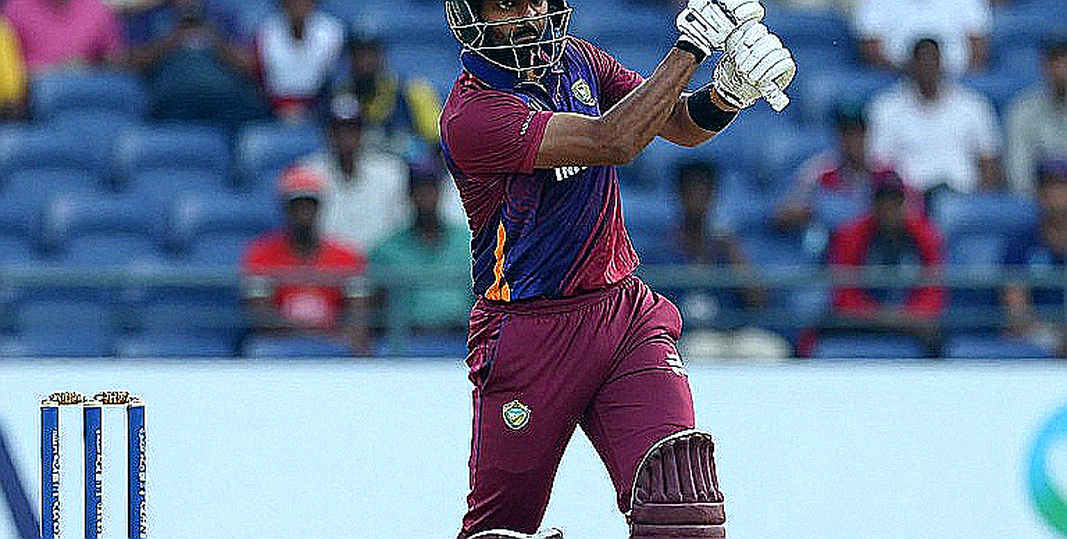
That is a depth signal and evidence of a strong pipeline, but it should not be read as proof of her dispensability. Two caveats apply. First, the one bilateral opponent named — Zimbabwe — is not a peer-level side, so clean sweeps carry limited informational weight about strength. Second, winning without her means her return is a contest for a settled spot rather than an automatic recall. That is a subtle but real sporting consequence.
Beyond fitness: the sharpness question
Rehabilitation from a high-grade hamstring tear is usually graded — strength, then running, then sprinting, then match play. 'Eyeing a return' is aspirational language, not a completed comeback. The bigger unknown is match-sharpness after a multi-month absence: quick singles, twos and outfield sprinting are precisely the skills a hamstring injury compromises, and they are a meaningful part of her value as a player. The injury attacks the running and agility component of her game rather than the hand-eye shot-making component.
Franchise versus country
This is a case study in overseas-league exposure risk. An Indian international sustained a serious injury in a foreign franchise competition and the cost was borne by the national team, which lost her for a continental tournament and a multi-sport Games. The strategic implication is that overseas league participation borrows against national-team availability. No NOC, insurance or compensation detail is provided, so nothing further can be concluded on that front.
On governance, the picture is clean: with the BCCI medical team owning the diagnosis, the return decision is board-gated, which reduces the risk of a franchise-driven rush. Equally, the article's phrasing may reflect player ambition rather than a board-cleared timeline.
The risk map
The dominant risk is physical — hamstring re-injury in a high-grade tear, amplified by the explosive running and fielding demands of her role. Second is match-sharpness deficit after a long layoff. Third is selection pressure created by the team's success in her absence. Fourth, a quieter factor: psychological caution, where hesitancy on quick singles can suppress strike rate even after physical clearance. Fifth is structural — a congested women's white-ball calendar spanning franchise leagues, continental events, a multi-sport Games and bilateral series, which is what converts a single tear into a longer absence.
There is no integrity, rules, DRS, DLS or selection-controversy angle here. Compliance risk is genuinely low.
Narrative and expectations
This is a comeback arc in its germination phase, before any hype crescendo. Its fundamental support is weak to medium, because no performance data exists to underwrite an 'impact return' story. The source is the ICC and the tone is restrained, so sentiment is not overheated relative to fundamentals. That could change quickly once a return squad is announced, particularly if the target is a marquee home event.
A quiet counter-narrative also exists: India kept winning without her. This is a return into competition, not a return to rescue.
What to track
First, an official return date or squad inclusion — the naming of a specific tournament. Second, the format of return, which will indicate how heavily the hamstring is being load-managed. Third, post-return output, particularly sustained strike-rate deviation from career norms. Fourth, workload policy from women's leagues and boards, including any new rest windows or caps. Fifth, independent confirmation of the reported missed events against ICC, ACC and OCA records, since the source names them but verification is pending.
Bottom line
This is a low-volume but physically significant item. The central question is return-readiness and recurrence risk, not newly revealed performance data. India's depth means there is no need to rush — and that, in this case, is the most important safeguard of all.